Danuri Call Center : 1577-1366
Family consultation call: 1644-6621


21F, 173, Toegye-ro, Jung-gu, Seoul (Chungmuro 3-ga, Namsan Square Building)
Copyright ⓒ KOREA INSTITUTE FOR HEALTHY FAMILY. All Rights Reserved
Improvement of infants’ health
- Home
- Health plus
- Improvement of infants’ health
Improvement of infants’ health
01Infants/Toddlers’ developmental characteristics
- During infancy (0-2 years), babies grow and develop very fast physically. Parents need to check periodically whether they grow and develop normally.
- During toddlerhood (2 – 5/6 years), babies develop their exercise capability noticeably, and their physical movement and use of hands become exquisite. During this period, they are highly likely to figure in safety accidents and contract infectious diseases so parents need to pay extraordinary attention to them and protect them diligently.
| Major features | Explanation | Things to be considered for health promotion |
|---|---|---|
| Brain development | About 90 percent of brain development is completed during infancy/toddlerhood. It is necessary to check whether a baby’s brain development is proceeding normally by measuring the size of the head periodically as it reflects the level of brain development. |
|
| Primary teeth | Infants start to have primary teeth about six months after their birth. Primary teeth should be maintained well as they secure the locations for permanent teeth. |
|
| Immune system development | During infancy/toddlerhood, babies’ immune system does not function perfectly. Thus, preventive inoculations and frequent hand washing are important. |
|
02Infancy/Toddlerhood health management
(1)Infants/Toddlers’ health checkup
- During infancy, babies grow and develop very fast physically. Parents need to check periodically whether they are growing and developing normally. Problems need to be found and corrected early.
- In Korea, arrangement is made to provide the following health checkup for infants/toddlers (14 months – 71 months) on a total of 11 occasions (including three occasions of dental inspection): growth/development abnormality, obesity, safety accidents, sudden infant death syndrome, hearing/visual abnormality, tooth decay, etc.
- Infants/Toddlers’ health checkup, which is provided free of charge, is intended for the continued management of babies’ physical growth and development and to provide adequate education/consulting to parents.
- You can check more detailed information such as items/frequency of checkups by visiting the website of the National Health Insurance Corporation (NHIC) (https://www.nhis.or.kr/nhis/healthin/wbhaca04800m01.do).
(2)Eyesight test
Eyesight test
- Sight is a sense that plays an important role in babies’ understanding of surroundings and acceptance of external information.
- If an abnormality in the eyesight is found during the period when the eyesight is still being developed, normal eyesight can be restored to a certain extent through treatment and management.
- Eyesight test must be done when children turn three and then six to check the abnormality of eyesight.
- When they turn 3, babies can receive the eyesight test using a picture eyesight chart.
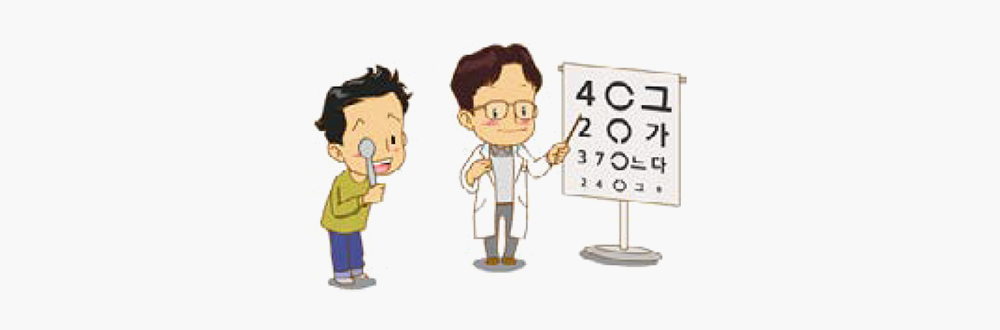
Children’s developmental characteristics and eyesight
- Eyesight is mostly formed at the age of 7 to 8. The average eyesight of a 3-year-old child/6-year-old child comes to 0.5 and 1.0.
- Infants/Toddlers have no way of expressing what they feel with regard to their bad eyesight to their parents. Thus, it is difficult to detect a problem in their eyesight at an early stage.
- To detect a problem in their eyesight, it is necessary to have infants/toddlers undergo periodic eyesight tests and observe them carefully.
- Upon detecting an action reactivity associated with a problem in the eyesight of an infant/toddler, he/she should be taken to a doctor immediately.
- Pupils leaning to one side (so-called squint-eyed) (for a child six months old or thereafter)
- Extreme light sensitivity
- Frequent side-glancing, eye jiggling, or bouncing
- Looking with half-closed eyes or raised eyebrows
- Sitting close to the TV
(3)Hearing test
Hearing test
- By age 3, more than 80 percent of a person’s hearing is completed.
- Where sound stimuli fail to reach the brain’s auditory centers before a child turns 3, the word center does not develop, which results in verbal/language disorder in the child, so he/she should receive special education.
- Those belonging to the hearing impairment high-risk group (including premature children and children who suffered from meningitis or suffocation as newborn ones or received long-term treatment using antibiotics) should undergo a hearing test periodically.
- Any infant/toddler showing signs associated with hearing impairment should see a doctor immediately.
| Development phase | Action reactivity |
|---|---|
| During infancy |
|
| During toddlerhood |
|
(4)Tooth health management
Teeth break the food into smaller pieces and help the saliva mix with the food to make it easier to swallow. Unless your teeth are healthy, your body cannot take in well the nutrients it needs.
Primary teeth and permanent teeth
- Primary teeth refer to the teeth that your body comes to have between 6 months and 30 months after birth. Their total number comes to 20 at 30 months after birth.
- Primary teeth start to be replaced with permanent teeth by the time you turn six or so.
- Primary teeth are softer and weaker than permanent teeth, so they are likely to decay unless managed carefully.
- Primary teeth secure the locations for permanent teeth. Make sure your children keep their primary teeth healthy so that they will have healthy permanent teeth.
- If your child has a decayed primary tooth, be sure to take him/her to a dentist.
Signs of eruption of primary teeth and their management
When an infant engages in any of the following acts, which is a sign of a primary tooth erupting, massage the gum or use a teething toy to reduce the discomfort:
- Drooling; sucking his or her own fingers often
- Biting solid objects often; biting the mother’s breast hard
- Fretting often; unable to fall asleep; having a mild fever
- Gum massage: Wash your hands clean and massage the baby’s swollen gum for about 2 minutes using ice
- Using a teething toy: Take it out of the refrigerator and let the baby bite it when he or she frets
- You may use a piece of banana kept in the refrigerator instead of a teething toy
- < Teething toys >
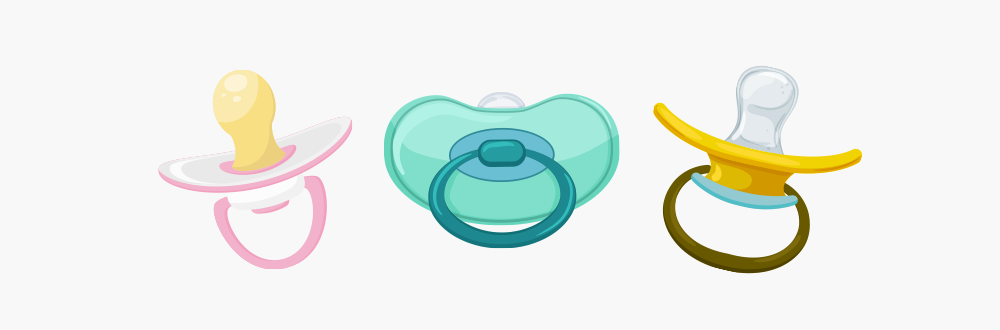
Teeth management
- After breastfeeding or feeding weaning food, be sure to wipe the inside of the baby’s mouth with wet gauze before the eruption of primary teeth.
- After the baby grows up for some time, rinse his/her mouth with water after feeding.
- After the eruption of primary teeth, clean them with a toothbrush.
- Start using toothpaste by the time the baby turns two. The use of fluoride toothpaste or fluoride during tooth development is a good way to prevent tooth decay.
(5)Preventive inoculation
- Through preventive inoculation, you can enhance resistance to or immunity from infectious diseases.
- During infancy/toddlerhood, babies’ immune system does not function perfectly. Thus, preventive inoculations are a must for babies.
- The Korea Disease Control and Prevention Agency (KDCA) provides infants/toddlers with State-designated preventive inoculations free of charge at a public health center or a designated medical institution close to you.
- To maintain immunity, it is very important to have infants/toddlers receive preventive inoculation according to the pre-fixed timetable.
- For more details, visit the relevant website (nip.kdca.go.kr).
| Notes | Relevant facts |
|---|---|
| An adult familiar with the health status of the baby should take the baby to the institution for inoculation. | That is because the adult is expected to see minute changes that may occur in the baby promptly after the preventive inoculation. |
| Make sure that the baby has no fever by measuring the body temperature before going to the institution for inoculation. | That is because there is no way to distinguish it from the fever associated with the preventive inoculation. |
| Wash the baby on the day before the day of the visit to the institution for inoculation. | The baby should not be washed on the day of inoculation. |
| Receive the preventive inoculation before noon if possible. | This is to allow a re-visit to the institution in the afternoon if any problem is found in association with the inoculation. |
| Do not take another baby (e.g., a sibling of the baby in question) to the institution. | Some types of vaccines may affect other children. |
| Do not have your child receive additional inoculation if he/she showed any side effect or allergic response from/to the preceding preventive inoculation. | In such case, additional inoculation is feared to result in more serious side effect. |
| Do not have a child allergic to neomycin or egg receive measles, mumps, and rubella (German measles) (MMR) vaccination. | The content of MMR vaccine is similar to that of neomycin or egg and is consequently likely to cause allergic response. |
| Stay for 20 -30 minutes at the place of inoculation and observe the baby’s condition. | That is a precaution taken against a possible urgent side effect. |
| Observe the baby carefully for more than 3 hours after returning home. | That is to check for any side effect from the inoculation. |
| Observe the baby carefully for 3 days after the inoculation. The baby should see a doctor immediately in case of high fever or sign of paralysis. | That is a precaution taken against a side effect of the inoculation. |
(6)Prevention of infection and washing hands
- Most of the infectious diseases are more likely to be spread by people touching their eyes, nose, or mouth with a hand contaminated with germs than the direct intrusion of germs into the nose or mouth. We can prevent 70 percent of infectious diseases simply by reducing the number of germs on people’s hands.
- If you do not wash your hands, the germs in them will multiply rapidly over time. Washing your hands is the best way to reduce the risk of spreading germs and stop infectious diseases.
- Be sure to wash your hands with flowing water for more than 30 seconds after using the toilet, returning home from outside, using your hand to cover your mouth when sneezing, touching a pet animal, touching money, or before eating/cooking food.
- Wash your hands thoroughly.
6 stages of washing your hands the right way
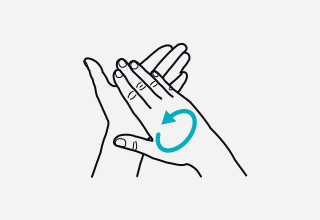
- 1Palm : Rub the hands palm to palm.
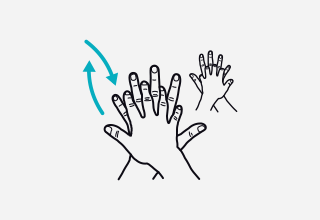
- 2Back of the hand : Rubbing the back of one hand and the palm of the other hand together.
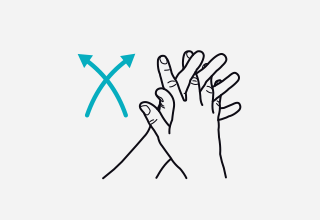
- 3Parts between fingers : Scrub between your fingers by interlacing your fingers and rubbing back and forth.
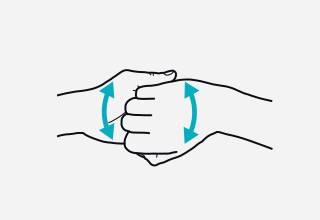
- 4Rub both hands together. : Clasp the fingers of both hands and rub them.
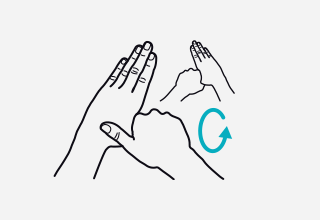
- 5Thumb : Rub your thumb into the palm of the opposite hand. Repeat for both hands.
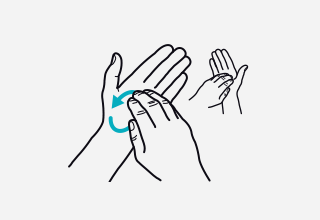
- 6Underneath the fingernails : Put the fingers of one hand on the palm of the other hand and clean underneath the fingernails.
- 1.Palm
- 2.Back of the hand
- 3.Parts between fingers
- 4.Rub both hands together.
- 5.Thumb
- 6.Underneath the fingernails
- Wash every part of your hand including the palm, parts between fingers, and underneath the fingernails.
- Source : 질병관리청 (https://nih.go.kr/gallery.es?mid=a20503010000&bid=0002&list_no=144821&act=view)
03Management of major health issues in infancy/toddlerhood
(1)Fever
Features
- Fever refers to a rise of body temperature above normal, and it is a sign of body disorder. (Rectum normal body temperature: 38℃/normal oral temperature: 37.5℃ /underarm temperature: 37.2℃)
- In case of germ invasion, your body raises its temperature to create a condition unfavorable for germs’ growth. When a baby has a fever short of 38° centigrade, it is advisable to observe him/her for a while if he/she can stand it instead of trying to lower it.
- If a baby is experiencing discomfort or showing signs of severe dehydration due to fever, be sure to lower the fever.
- Febrile seizure: This is a convulsion in a child caused by an abrupt fever. In most cases, the baby comes back to normal without any problem, but be careful as frequent febrile seizure may have an impact on the child’s brain.
Cause
Common causes of fever in an infant include enteritis, urinary tract infection, inflammation of the middle ear, cold, etc.
Symptoms
- Baby fretting and refusing to eat
- A drop in body temperature right before a rise followed by sweating
- Dehydration

- 1Cold hands and feet
- 2Pale and mottled skin
- 3No peeing for 6 - 8 hours
- 4Labored breathing; shortness of breath
- 5Having a fever
- 6Fonticulus anterior sunken
- 7Sunken eyes and no tears when crying
- 8Dry mouth
- 9Reduction of skin tension
Taking care of the baby
- Measure the baby’s body temperature.
- Lower the fever if the body temperature goes higher than 38℃ and the baby is experiencing discomfort.
- If the baby’s fever does not subside, see a doctor.
| Cautions to be taken when using a fever reducer | Be sure to see a doctor in one of the following cases: |
|---|---|
|
|
(2)Inflammation of the middle ear
Features
- Inflammation of the middle ear is a disease that most commonly occurs in an infant six months to 2 years of age next to cold.
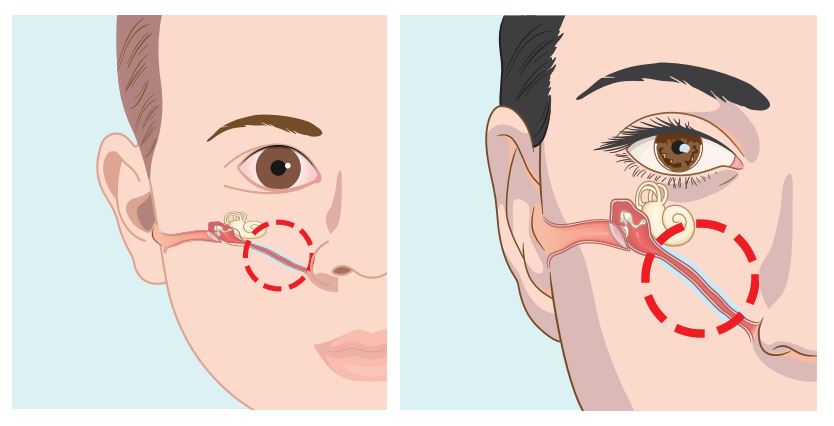
- As for an infant less than 3 years old, his/her Eustachian tube (the passage between the nasopharynx and the middle ear) is shorter than that of older people and wide and horizontal. Thus, germs in the nasopharynx can easily spread to the middle ear.
- If the symptom gets severer, the pressure with the middle ear goes up, possibly resulting in myringorupture.
- Infants cannot express their trouble within the ear. Thus, if parents do not observe carefully, their problem in the ear will be found belatedly, resulting in chronic inflammation of the middle ear or difficulty in hearing.
- To prevent inflammation of the middle ear and chronic inflammation of the middle ear, parents should strive to detect symptoms early and have the baby see a doctor.
The Eustachian tube of a baby less than 3 years old is shorter and wider than that of an adult. It is also horizontally connected to the nasopharynx. A viral infection in the nose can trigger bacteria to migrate from there to the middle ear, leading to inflammation of the middle ear.
- < Difference between a baby (left) less than 3 years old and adults (right) in the position/angle of the Eustachian tube >
Causes
- When a baby is fed in a lying position, the milk is likely to enter the middle ear through the Eustachian tube and lead to inflammation.
- If you let a baby blow his/her nose hard, germs included in the nasal discharge are likely to enter the middle ear through the Eustachian tube and lead to inflammation of the middle ear.
- If a parent is a smoker, an infant is likely to be exposed to the smoke, which will weaken his/her respiratory system and cause inflammation of the middle ear.
- Infants have low resistance to germs. Thus, they are likely to catch cold or get inflammation of the middle ear in a place where there are many people.
Symptom
- A baby comes to suffer from high fever (over 40°) and earache. He/She will shake his/her head and fret by pulling his/her ears.
- The earache gets worse when pressure is applied to the ears. That is why babies with earache fret more when laid down and fret less when held in Mom’s arms.
- Refusing to eat; vomiting; diarrhea
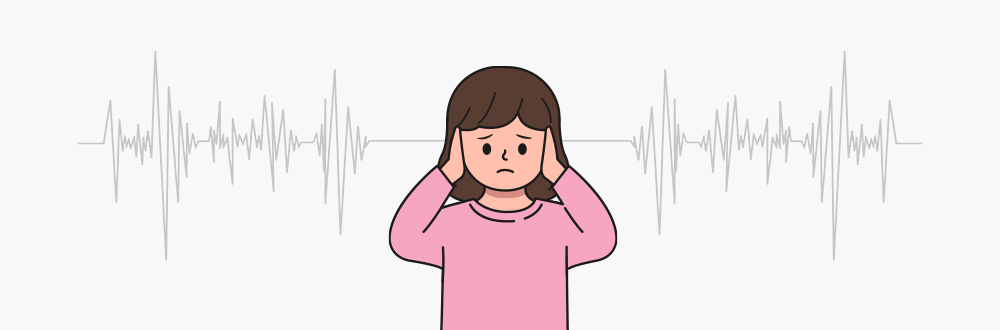
- Complaining about a sense of distension in the ears; turning up the volume of the TV due to the inability to hear well.
- When the eardrum is hurt due to inflammation of the middle ear, pus or sore oozes out of the ear.
- < Action reactivity of infants/toddlers when they have inflammation of the middle ear >
Treatment and care
- An infant showing signs of inflammation of the middle ear should be taken to a doctor immediately.
- To prevent the recurrence of inflammation of the middle ear, treatment with antibiotics should be continued as per the doctor’s instruction.
- Drinks or watery and soft food need to be given frequently in small amounts to a baby refusing to eat due to earache.
- Putting a towel wet with warm water on the affected ear with that side facing downward can help the baby feel less pain.
- If pus or sore oozes out of the ear, wipe clean the parts of the body close to the affected ear with physiological saline and apply ointment as per the doctor’s instruction.
- Where inflammation of the middle ear is severe, the doctor may insert a drain tube into the eardrum. Take care not to let water enter the ear in such case.
| Do’s and don’ts | Explanation |
|---|---|
| Do not smoke near the baby. |
|
| Breastfeed the baby. |
|
| Hold the baby in your arms when breastfeeding. |
|
| Do not let the baby blow his/her nose hard. |
|